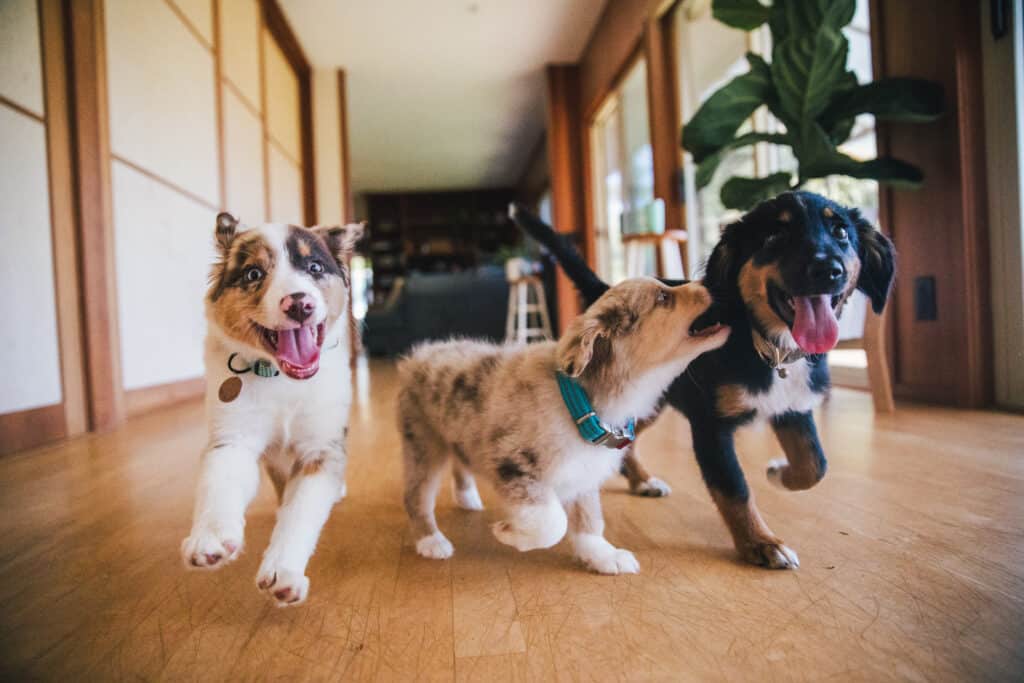


Obedience Behaviours You Can Teach Your Dog!
Dogs are great company but sometimes they forget their manners. Canine behaviour problems are often misunderstood and mishandled by pet owners. The focus needs to be less on correcting the problem behaviour and more on teaching the right behaviour, according to Louise Harding, master dog trainer and author of Nose to Tail: A Holistic Guide to Training Your Dream Dog!
“Most problem behaviours are usually the result of a dog that hasn’t been taught what’s expected of it,” said Louise. “Without boundaries and direction, dogs choose their own behaviours. So, training is key.”
As a dog trainer and animal wrangler for 25 years, Louise regularly receives calls for help to stop pet behaviour problems, such as barking, digging, chewing or pulling on the lead. She always asks the owners ‘what behaviour is missing’ and to concentrate on teaching that rather than trying to ‘correct’ the problem.
“This is a much more positive way of approaching your training. ’I have a problem dog’ is now reframed as ‘What behaviour would I like my dog to learn?’ reframing is also a helpful diffuser of the angst and frustration when your dog isn’t behaving in the manner you would like.”

She also stressed knowing your dog’s genetic predisposition and the common traits of the breed and behaviours, and to be realistic with your expectations of your dog. If you have a high-drive Kelpie, it’s probably not a reasonable expectation to leave your dog in a front yard where it can see and chase the postie, bike riders and other moving objects. Be informed about your dog’s background. You also need to understand your dog’s preferences and motivations to use the appropriate motivator (ie food, play, praise) to train your dog.
Common Behaviour Problems Solved
Louise explains some of the common canine problem behaviours and how to replace them with good manners!
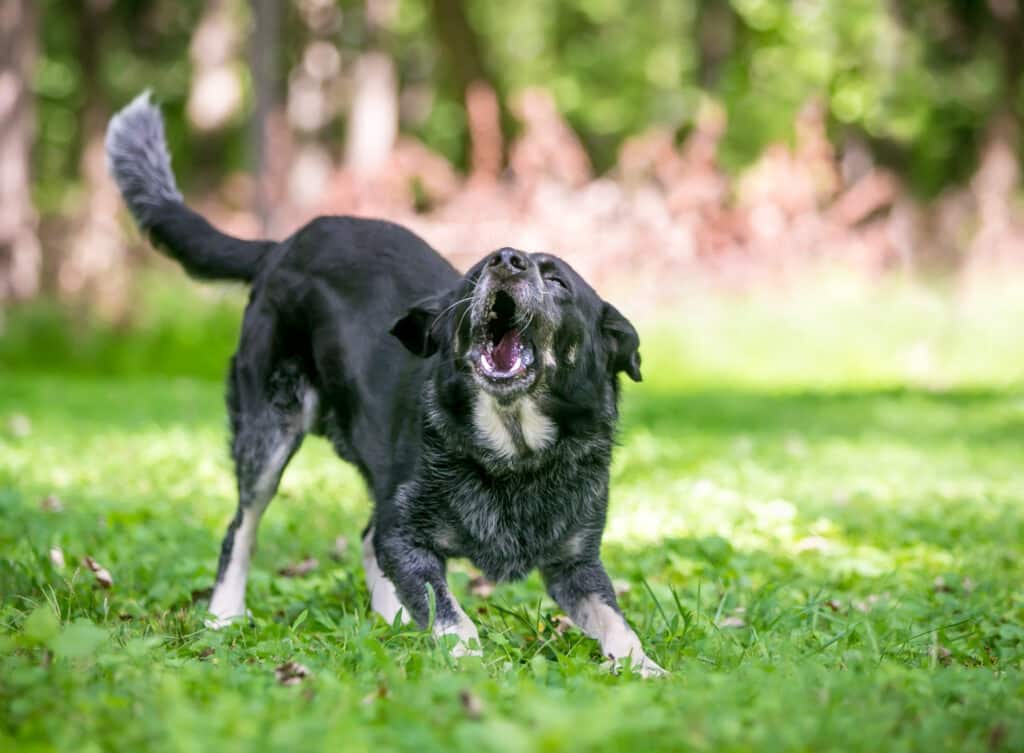
Barking
Barking is a natural canine behaviour but becomes an issue when it’s excessive! Problem barking can be caused by boredom, frustration, fear, confusion (receiving mixed messages from you) or being accustomed to much attention.
You can’t expect to train your dog to stop barking altogether, but you can get it under control over time with the following exercise:
- Each time your dog barks, after two or three woofs, say ‘thank you’ and then ask for ‘quiet’ (as an instruction, not a reprimand).
- Once quiet, even for just a tenth of a second, say ‘yes’ and reward.
- Repeat Step 2, this time extending the required period of quiet (no barking) to three seconds, say ‘yes’ then reward.
- Repeat Step 3, extending the required ‘quiet’ period to five seconds, say ‘yes’ then reward. Gradually increase the required period of silence.
Destructive Behaviours
It is normal for dogs to dig or chew on things. In fact, some breeds such as Terriers, Beagles and Bloodhounds are natural diggers! Destructive behaviour is a problem if they destroy things we don’t want them to, such as furniture, shoes, doors etc.
They may do this to seek attention because they have the wrong kind of chew toy or they are not getting enough exercise or daily activity. Some pets become destructive also due to anxiety, fear or aggression, which requires veterinary attention.
With your vet’s advice, here are some tips to help keep your house from being obliterated:

- Give your dog lots of physical exercise and mental stimulation.
- Avoid giving objects that your dog likes to bury (ie bones) – substitute with a similar toy.
- Confine your dog in a crate/kennel (away from location of obliteration) when you’re not around to supervise – at least until the destructive behaviour has been modified.
- If your dog is a problem digger, provide a designated digging zone and encourage to excavate there!
Pulling on the Lead
Dogs pull on the lead not because they want to be the leader. This behaviour is a natural ‘opposition reflex’ – if you pull one way, your dog will pull the other! Dogs also love nothing better than to be outside exploring with gusto!
Here is a way to get you walking with your dog without a struggle!
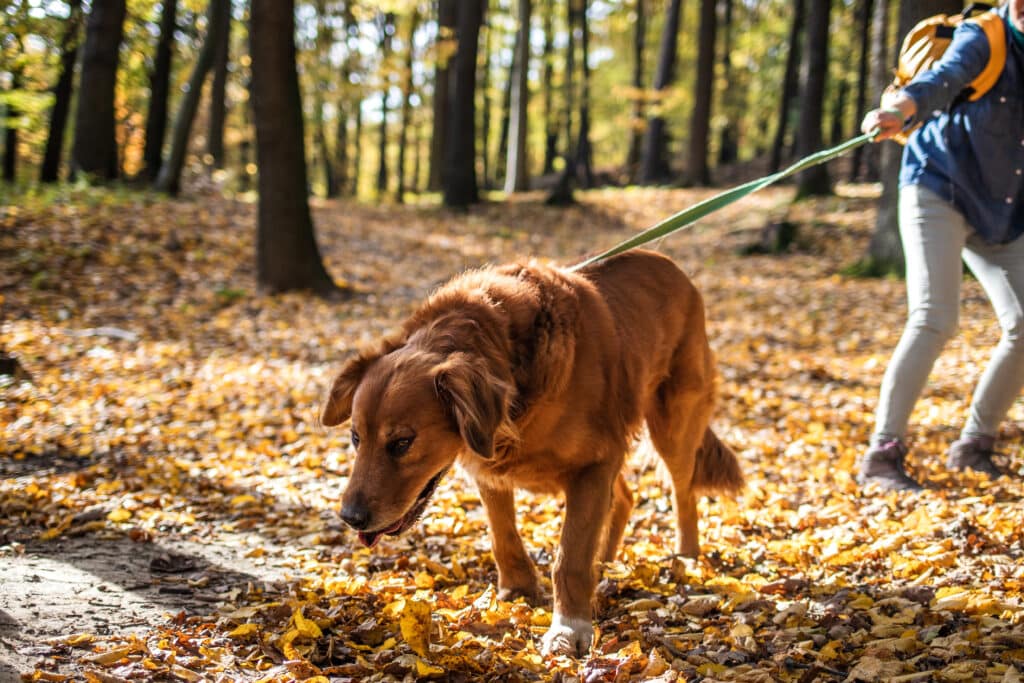
- Have a lightweight lead about 1.2 metres long, plenty of yummy treats and a lot of patience!
- First, tie the end of your dog’s lead to a post, giving him a radius of 1 metre, and stand next to the post.
- When your dog is standing calmly without pulling and relaxed for 10 seconds, give him a long pat. Do this until your dog stops pulling and stands calmly beside you.
- Untie your dog and remain standing still whist holding the lead. Reward your dog for waiting calmly.
- With your dog on your left side and treats in your right hand, slowly take a few steps and when you’re happy with the calm walking, say ‘yes’ and reward with a treat from your left hand!
- Keep going until your dog’s confidence grows and you both will enjoy walking together.
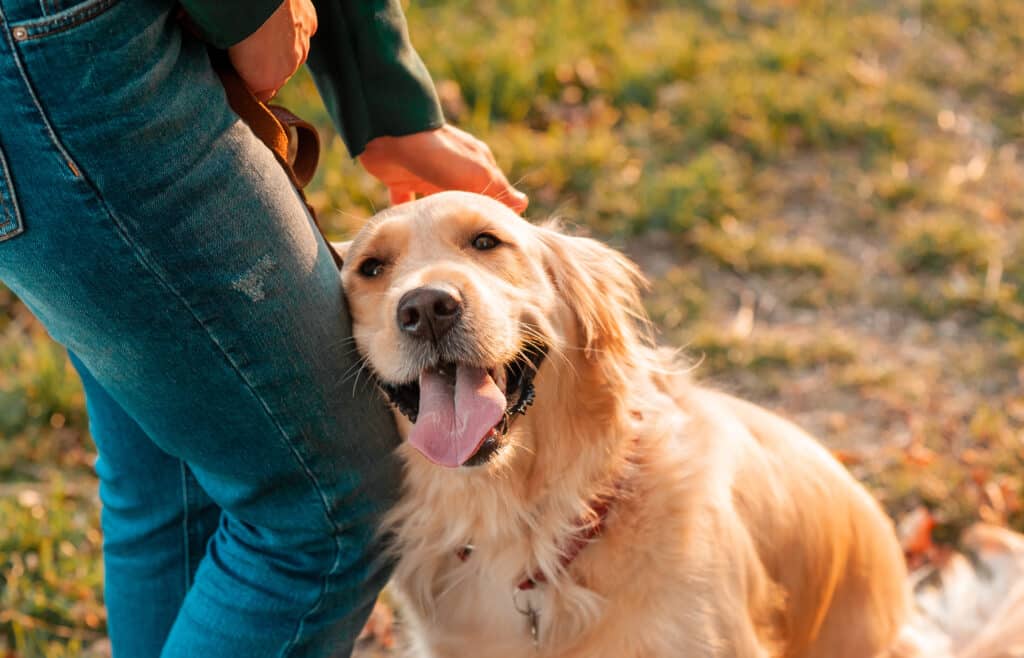
COME! Or don’t!
Dogs fail to return when their name is called normally because they would rather be doing something else or they are afraid of the consequences upon return. Or they simply don’t know what the cue means!
Teaching your dog to always come could save his life and make yours less frustrating watching him run in circles or disappearing into the horizon.
Here is a great way to teach your dog to come! It helps to start training in a low-distraction environment and gradually increasing distractions.
- When your dog is facing toward you a short distance away, call his name.
- The moment his attention is focused on you and his body moves towards you, say ‘yes’.
- Place the back of your hand against the front of your leg (palm facing outwards) with a treat and reward when your dog arrives!
- When your dog is facing away a short distance from you, call his name.
- The moment his attention is focused on you and he begins to turn his head and moves towards you, say ‘yes’ and reward with a treat the same way (palm facing outwards).
Louise explains in her book in more detail how to solve these behaviour problems and more!
ALWAYS reward when your dog does the ‘missing’ behaviour. You won’t be missing it after a while!
Article written by Caroline Zambrano of
Pet Journo