
At the Tikki Hywood Foundation, our work is rooted in one simple, unwavering belief: every wild animal deserves the chance to heal, to recover, and – wherever possible – to return home.
Since 1994, we have operated from our base in Zimbabwe, focusing our hearts and resources on the species so often overlooked by the world, those whose survival depends not just on physical protection, but on a deep, soul-level understanding. Among them is the Temminck’s pangolin, perhaps the most specialized and vulnerable mammal on Earth.
The Art of the 'Slow Heal'
Pangolins are unlike any other creature. They are the forest’s, the savanna’s – quiet engineers, feeding exclusively on ants and termites. They often refuse food unless allowed to forage naturally and are extraordinarily sensitive to the “noise” of stress.
Successful rehabilitation is not a factory process; it is slow, labour-intensive, and deeply personal. It demands a level of patience that cannot be measured in hours, but in heartbeats. Every pangolin that comes through our gates brings a story. Some are brief. Others stay with us forever.
Benyu’s story is one we will never forget.
A Loss Beyond Words
Benyu arrived as a tiny infant, carrying a weight no living thing should bear. She had witnessed the death of her mother, who was tragically trampled by a herd of elephants. When she was found by good Samaritans, Benyu was still clinging to her mother’s body – terrified, exhausted, and refusing to let go.
While she was physically unharmed, her emotional trauma was profound. From the moment she arrived, Benyu made it clear that trust would not be given freely; it would have to be earned.
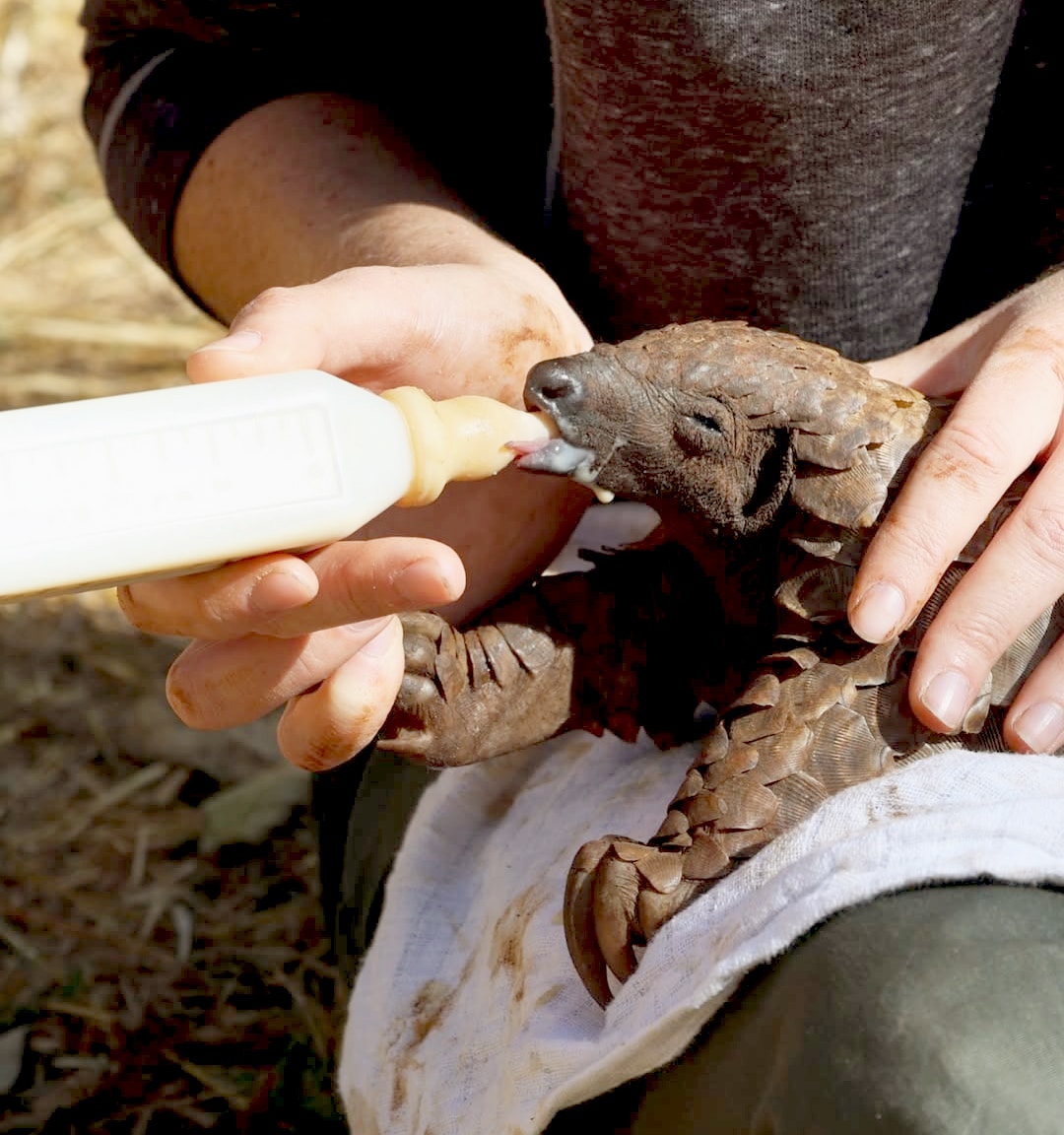
For months, our dedicated THF team offered her a quiet presence and a gentle routine. Slowly, the armour began to soften. She learned that she was safe. She began to drink her milk eagerly, realizing it was the lifeline she needed. Most importantly, she learned that hands could be kind – and that loss did not have to define her future.
As she grew, Benyu’s confidence blossomed. She began exploring the bush with curiosity, foraging for the ants and termites she would need to survive in the wild. But healing is rarely a straight line.
The "Weaning Wall"
When Benyu transitioned to longer foraging sessions and the milk bottle was removed, her confidence faltered. She lost interest in feeding, and her weight began to drop, a clear sign of weaning stress. Though her body was ready to move on, her spirit still relied on the comfort and reassurance that the bottle provided and our hands on attention had offered her.
So, we listened. To support her through this vulnerable stage, we reintroduced a bottle containing our specially formulated diet.
The effect was immediate. Benyu relaxed. Her appetite returned. Her confidence followed. And her journey to adulthood and ultimately release continued.
“The recent introduction of the Echidna Diet from Vetafarm has been a gamechanger for us. It allowed us to strengthen our formulation, increasing the nutritional value and palatability for pangolins like Benyu who are struggling with the emotional transition of growing up.”
More Than a Species
Sometimes rehabilitation means moving forward. And sometimes, it means offering comfort – allowing an animal to find their footing again at their own pace.
Today, Benyu is a quietly confident young female. Her story is a poignant reminder that conservation is not only about saving species; it is about honouring individuals. It is about patience, empathy, and meeting each animal exactly where they are.
This is what we do. This is why we do it.
“With the support of partners like Vetafarm, we can give animals like Benyu everything they need to heal – from highly specialized nutrition to the time and understanding that are vital to recovery.”
Benyu’s next milestone will be her release back into the wild, where she will finally return to the life she was always meant to live.
Article and Images provided by the Tikki Hywood Foundation