
Bumblefoot in Falcons
Bumblefoot is a condition that affects the feet of falcons, causing inflammation and infection. Leading to the formation of swollen, painful, and sometimes ulcerated areas on the sole of the foot or on the toes. The severity of the infection varies depending on the cause and the length of the infection. Bumblefoot can affect both captive (Hunting) and wild falcons. However, captive falcons are more susceptible to bumblefoot. If left untreated, bumblefoot can become severe, leading to possible permanent foot damage.
There can be a variety of factors that can contribute to the development of bumblefoot. Poor hygiene, improper perching surfaces, nutritional deficiencies, trauma, obesity, prolonged cessation of training, dehydration, long talons, and poor circulation are the main mitigating factors.
Stages of Bumblefoot
Early Stage
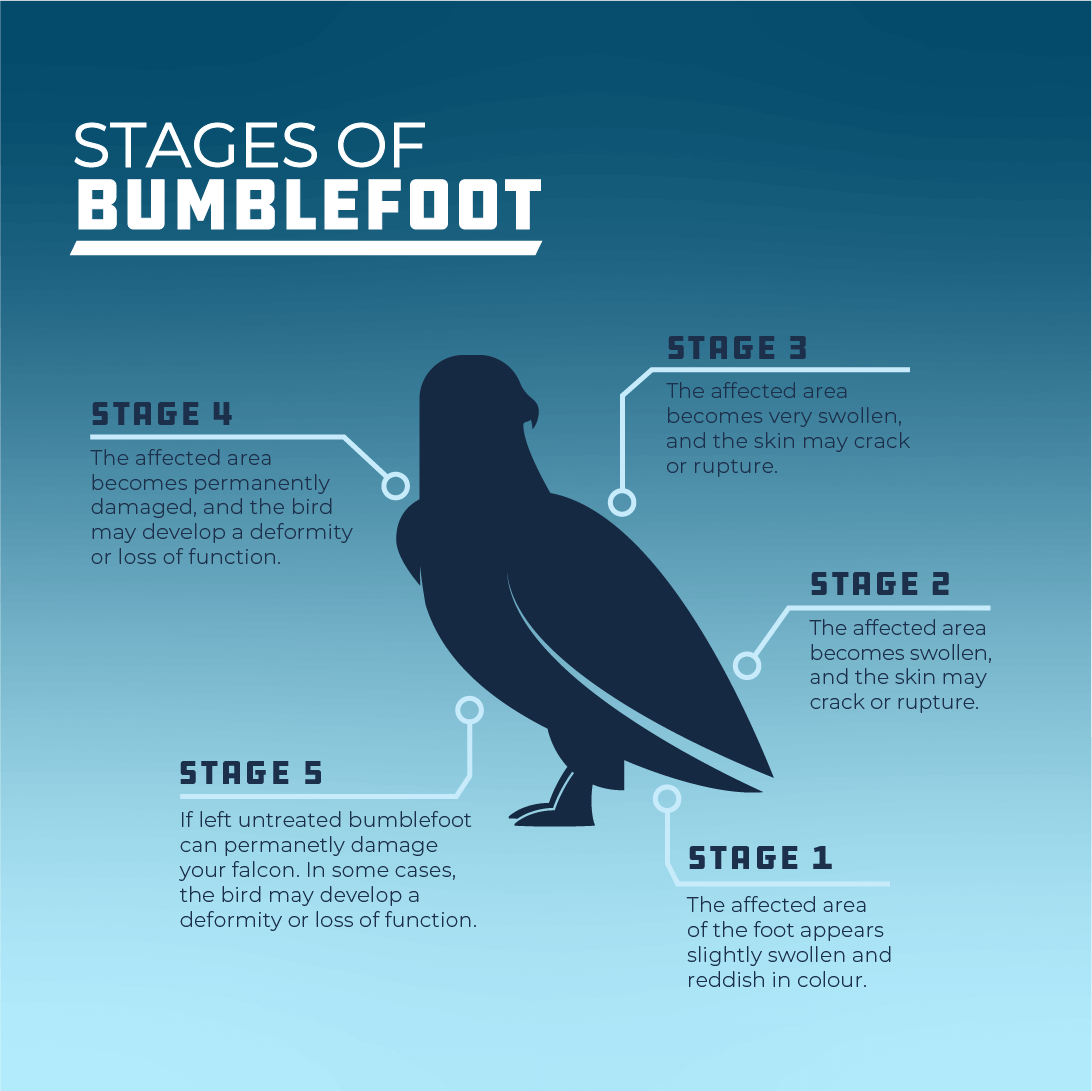
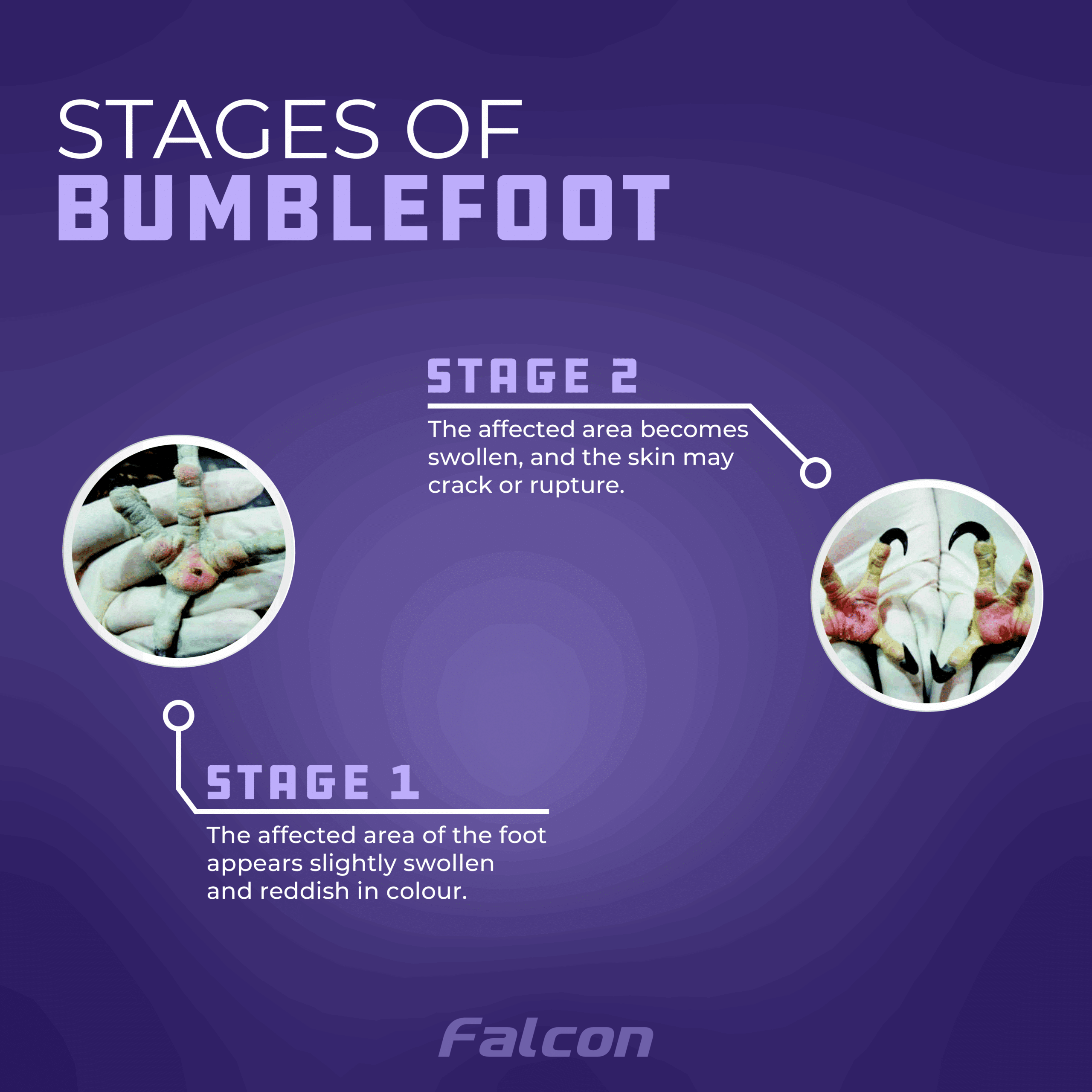
The affected area of the foot appears slightly swollen and reddish in colour. The bird may not show any signs of pain or discomfort at this stage.
Moderate Stage
The affected area becomes more swollen, and the skin may start to develop a small, hard bump or scab. The bird may begin to show signs of limping or discomfort.
Severe Stage
The affected area becomes very swollen, and the skin may crack or rupture. The bird may begin to show signs of severe pain, reluctance to move or perch, and may become inactive.
Chronic Stage
The affected area becomes permanently damaged, and the bird may develop a deformity or loss of function. The bird may experience ongoing pain and discomfort.
Incurable
It is possible for bumblefoot to progress to a point where the affected bird’s foot may become permanently damaged, and in some cases, the bird may develop a deformity or loss of function.
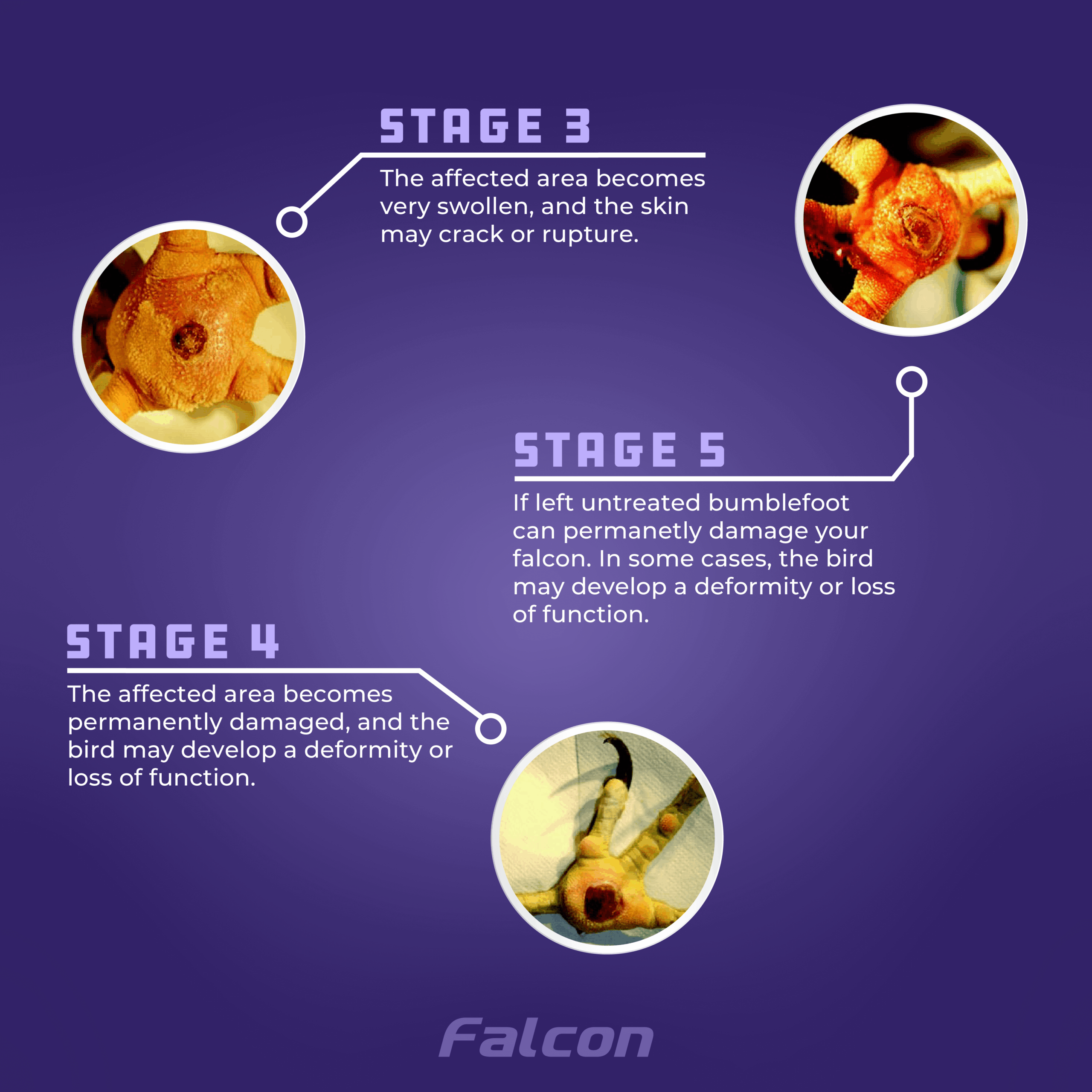
- Click images to zoom in
Management
- Regular check-ups: Regular check-ups by a veterinarian can help catch bumblefoot early on and prevent the condition from worsening.
- Clean and dry housing: Providing your falcon with clean and dry housing can reduce the risk of bumblefoot. The use of proper bedding, such as straw or wood shavings and sand for the flooring, can help keep the housing dry.
- Perching surfaces: Cover your falcon's perching surfaces with a layer of artificial tartan or soft leather to prevent pressure points on the bird's feet. A variety of perching surfaces can be used to promote the bird's natural behaviour.
- Proper nutrition: Proper nutrition is essential for the bird's health and can help prevent the development of bumblefoot. A balanced diet that includes all the necessary vitamins and minerals should be provided.
- Weight reduction: To reduce the risk of bumblefoot in falcons, it is important for the bird to maintain a healthy weight. Proper nutrition and exercise during hunting season are encouraged. With freedom of movement during the moulting periods.
- Wound care: If bumblefoot is present, proper wound care should be administered by a veterinarian. This may involve cleaning the wound, removing dead tissue, and applying medication.
- Pain management: If your bird is experiencing significant discomfort, advise your veterinarian for prescription medication to help manage the pain.
- Rehabilitation: Rehabilitation may be necessary for severe cases of bumblefoot. This may include rest, physical therapy, and the use of special footwear.