
Falcon Injury and Wound Care
Discover the common causes of injuries and how to best care for your falcon’s wounds.
Common causes of injury
Falcons can acquire a number of injuries in everyday life, from hunting, accidents, fighting, improper care, perch injuries and skin and feather problems. Providing your falcon with a safe environment and eliminating potential threats will help to reduce the risk of injury. Falcons having constant contact with perches or gloves can develop callouses and ulcers, which may develop into bumblefoot. As falcons age, they become prone to injuries and are more susceptible to infection to decreased mobility and bone flexibility.
Wound management
Learning how to properly clean and manage your falcon’s wound can help prevent infection and speed up healing. Identifying the type of wound and its severity will help you determine the appropriate treatment.
- Clean the wound and removing any debris, dirt or feathers.
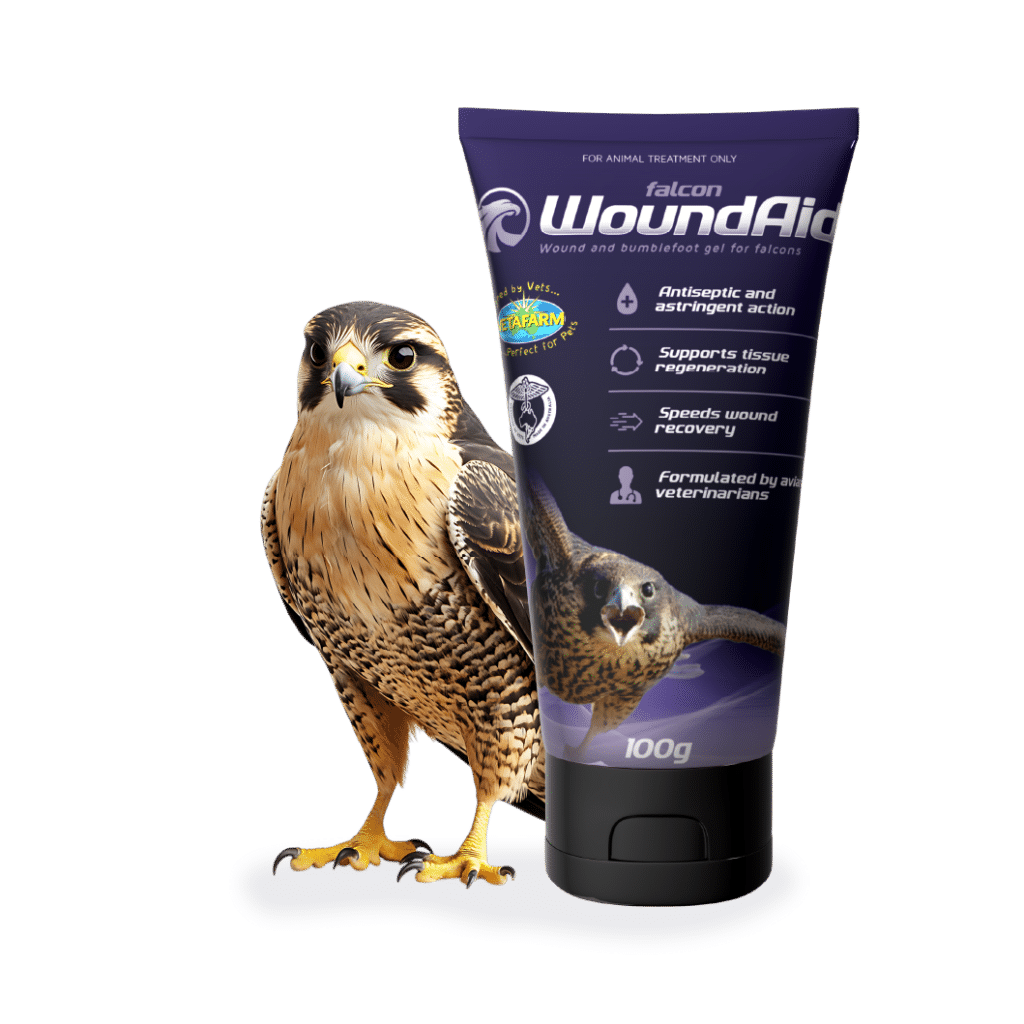
- Apply a topical agent - Falcon Wound Aid Gel, to promote healing and prevent infection.
- Depending on the severity of the wound, dressing can be applied to the wound to protect it and promote healing. This can be particularly beneficial for wounds that are located on the bird's feet or legs, as these areas are prone to injury.
- Monitor the wound for any signs of infection or complications. This may include increased swelling, redness, or discharge from the wound. If any of these symptoms occur, seeking veterinary care as soon as possible is important.
- Rest may be necessary depending on the severity of your falcon's wound to help promote healing.
- Housing your falcon in a dark, quiet location can reduce stress.
Factors affecting wound healing
There is a variety of factors that can impact how your falcon’s wound may heal. Birds with poor health or weakened immune systems may heal slower. Ensuring your bird receives adequate nutrition is essential for optimum wound healing and the overall well-being of the bird. Keeping your bird in clean dry housing will help reduce infection chances.
Wounds located on wings or legs can take more time to heal, due to the constant stress and movement in these areas. Larger wounds can take longer to heal and may require more extensive treatment to ensure proper healing. There are different treatments required for different types of wounds. Contact your veterinarian if you think your falcon may require professional help.