

Feather Destructive Behaviour
Normally, healthy preening behaviour in parrots should clean and take care of feather structure without damaging the feather itself, keeping the parrot plumage in optimal condition for flight and temperature fluctuations.
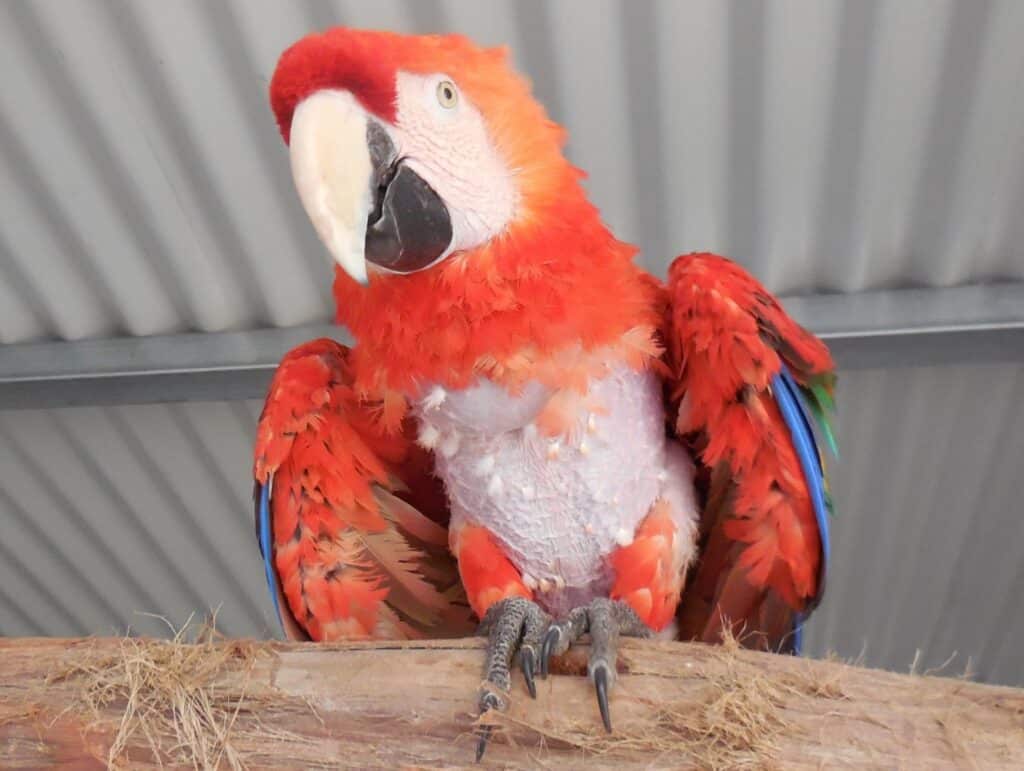
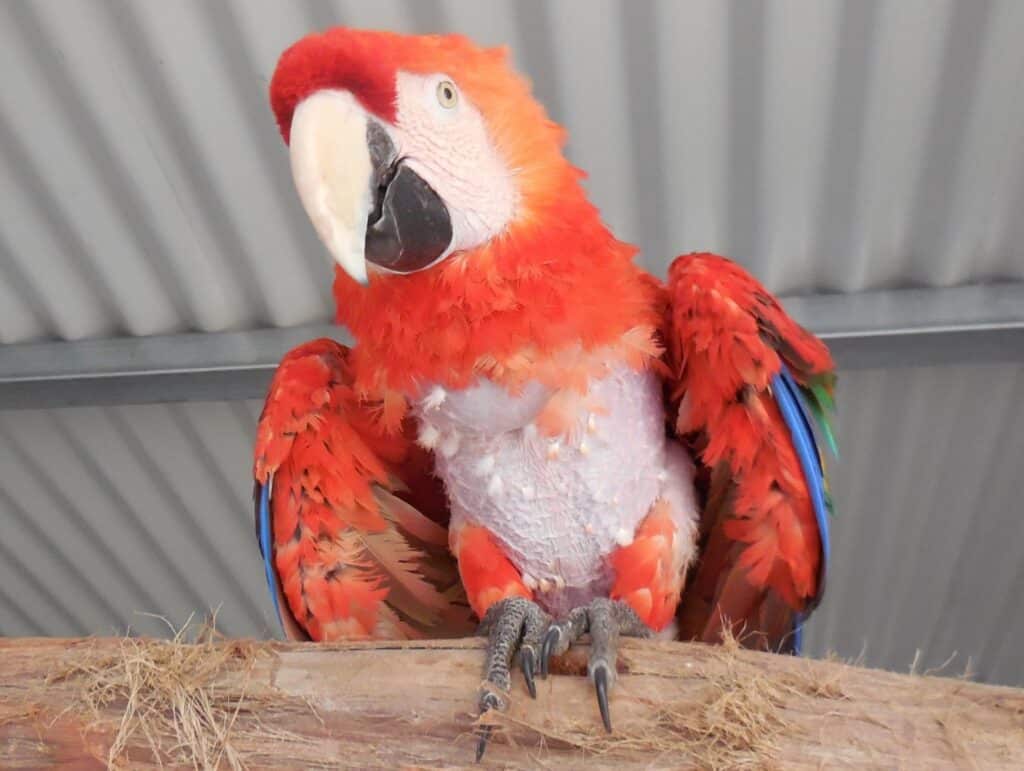
Feather Destructive Behaviour (FDB) is any type of abnormal preening behaviour a parrot presents that causes repeated and potentially habitual damage to feather quality, cover and function. FDB can appear as barbering or breaking off feather tips. Plucking out of whole feathers, or even progress to self-mutilation of the skin if the condition is severe and left untreated. FDB presentation differs vastly between cases, beginning gradually and progressing over time, or can appear almost overnight.
Causes of feather destructive behaviour
FDB is an incredibly frustrating and emotional condition for owners, as to address the behaviour the cause (or causes) needs to be identified. Which is essentially a process of elimination of every aspect of your parrot’s life. What we can confidently say is that FDB occurs when something isn’t right in your parrot’s world.
Causes can be grouped into medical and non-medical categories, and may be a combination of several causes. It is always recommended to get your parrot to an avian veterinarian for a full check-up at the earliest presentation of FDB. So any possible medical causes can be identified and treated before they progress further. If the veterinarian deems the FDB to be non-medical/behavioural. Then they will recommend you seek a parrot behaviour consultant (like us! www.parrotlife.com.au) to help you diagnose and treat the problem.
How is Feather Destructive Behaviour Diagnosed?
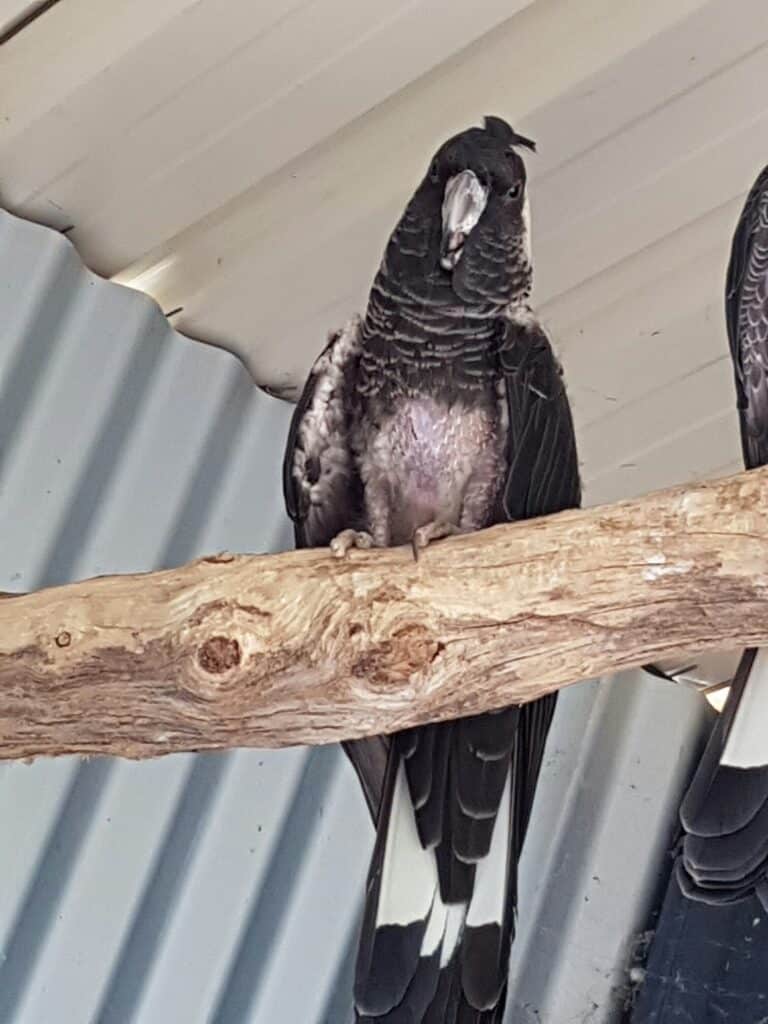
When your avian veterinarian or behaviour consultant assesses your parrot, they will ask many questions including the history of your parrot. They will also ask how it was reared, and the history of the behaviour in a ‘big picture’ approach, to try and identify possible triggers. Assessment of the environment, interactions and diet may then be followed by watching the behaviour in action – is the behaviour serving a purpose for the bird? Is it being reinforced in any way? What starts the behaviour? What stops the behaviour? They will also closely assess the patterns of the FDB to try to find more clues.
Common Patterns of FDB:
- Acute: Caused by an ‘event’ that causes rapid loss of feathers (i.e. injury, abrupt change in care)
- Chronic: Slow build up of the FDB, often from trimming or barbering feathers, can progress to full feather removal apart from the head feathers that they can’t reach.
- Localised: Often causes localised feather destruction over the site. Look for asymmetrical pattern and other identifying clues (i.e. a crop impaction/blockage may begin with plucking over the crop before progressing, and is backed up by chewed material in the cage on investigation).
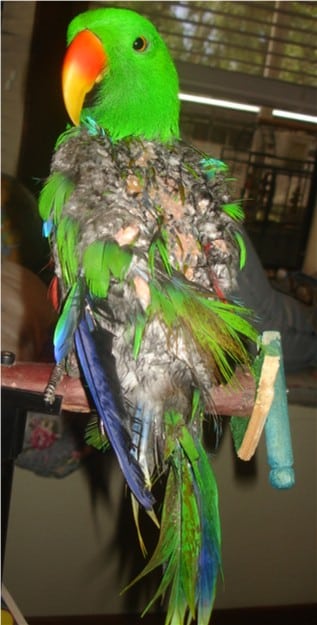
- Generalised: Causing generalised FDB across the body that is largely symmetrical. Can start anywhere. Commonly begins under wings, often from overzealous preening due to under-stimulation.
- Chest pattern: Begins high or low on the chest, neck or legs, symmetrical, expands to top of wings, back, then can continue to full body (apart form head). Characteristic ‘naked chest’ look. Often (but not always) linked to hormone amplification.
- Flight feather/tail pattern: Begins as slow damage to primary and tail feathers, symmetrical. Common in large cockatoos exposed to chronic stress and begins with the look of ’unpreened’ flight feathers. Can also begin from irritation, falls and injuries resulting from poor wing clips.
- Non-beak damage: Repeated mechanical movement causes feathers to wear down (i.e. neck rubbing with foot, vent rubbing during repeated mating behaviour, repeated wearing down/breakage of an area of feathers on cage furniture or during falls). Conspecific damage – other bird removing feathers during overzealous allopreening– look for missing head feathers and observable behaviour.
Combatting Feather Destructive Behaviour
Once you have sought help from your veterinary and behaviour specialists, you should have a better idea of what triggers or events may have caused the feather destruction, and also what is maintaining the behaviour. By addressing every aspect of the ‘parrot’s world’ and making changes where needed, the behaviour often begins to correct itself. You may never know what exactly caused the FBD – in many resolved cases we never know for certain what action or combination of actions fixed it, we are just glad it has stopped!
Using a ‘big picture approach’ ensures that you are more likely to hit the nail on the head accidentally than by trying one thing at a time. Unless recommended by your avian vet, be wary of ‘cure-all’ remedies such as sprays and products claiming to assist in feather regrowth. Even if you see a temporary improvement while using them, as they provide a band-aid solution at best, masking the true source of the behaviour. Set realistic goals, for example with severe FDB or skin mutilation just a halt in the behaviour will be a win. Remember if the behaviour has been happening for several years then follicle damage may mean feathers never grow back even when plucking has stopped.
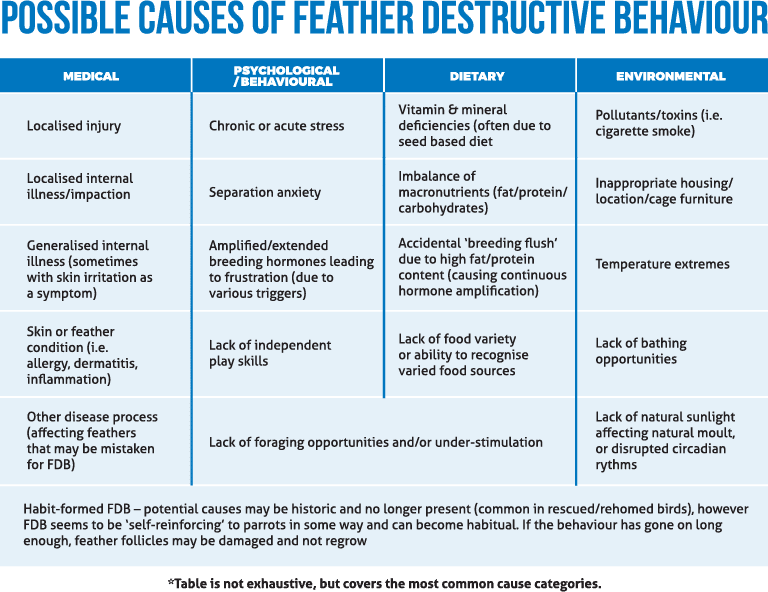
By addressing the categories on the table above, you may already have some idea of what areas you need to work on. You may find you need to; convert your parrot off a seed based diet to a more nutritious pellet based diet (see Vetafarm’s great pellet range and conversion tips!), teach your bird how to forage effectively and on a wider variety of food, change the position of the cage or aviary, reduce hormonal triggers or promote play skills that are less dependent on your family to reduce separation anxieties.
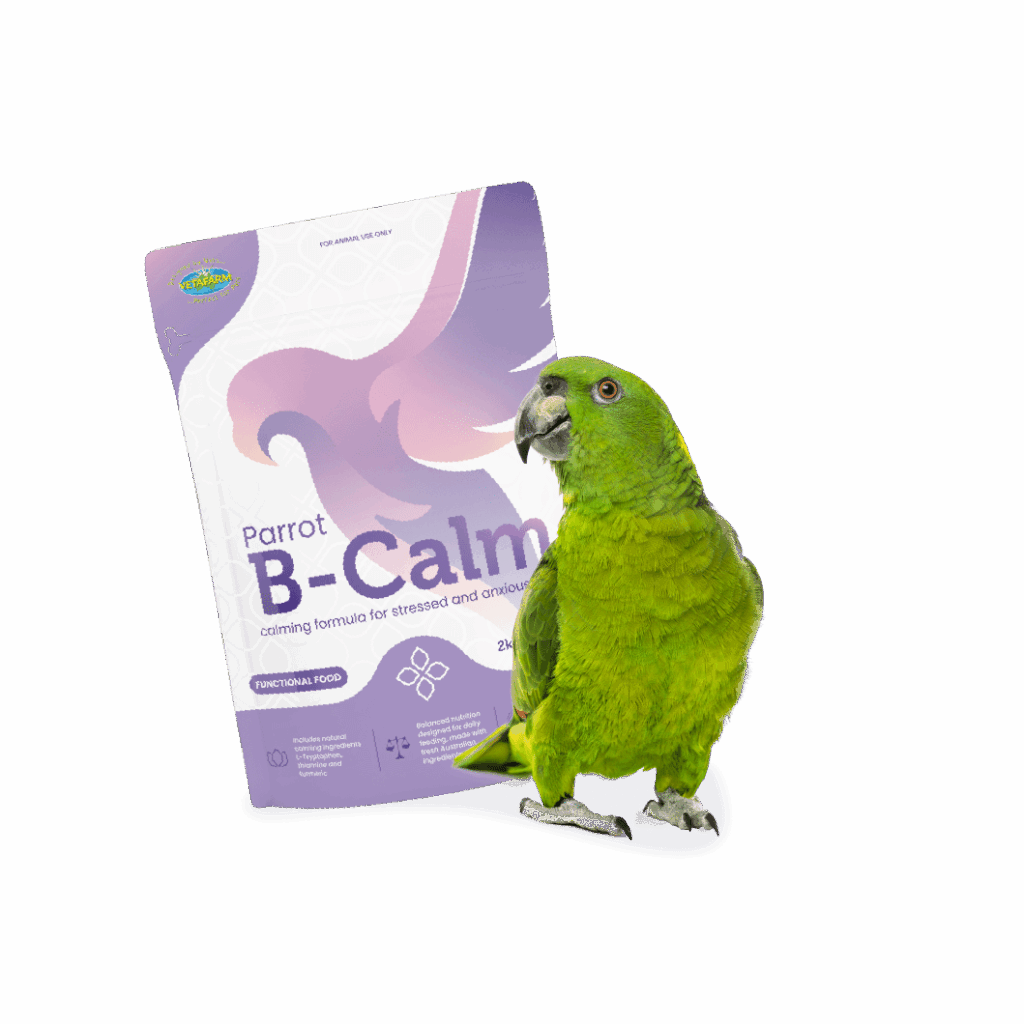
Parrot B-Calm
Parrot B-Calm is a functional complete diet providing balanced nutrition and supporting the reduction of stress and anxiety with natural ingredients. Made with amino acid L-Tryptophan, a natural precursor for synthesising serotonin in the brain. Parrot B-Calm provides non-drowsy, non-sedative action balanced with fresh Australian whole grains, vitamins, minerals and turmeric to support your bird’s health and well-being (see Parrot B-Calm pellets).
Your Feather Destructive Behaviour Checklist
- See a certified Avian Vet for a full diagnostic work up. Prepare to spend money on necessary investigations.
- Problem solve a possible cause timeline using the table above.
- At what times is your parrot plucking? Start a diary.
- At what times is your parrot not plucking or stops plucking? Brainstorm ways can you promote this?
- Assess exactly what your parrot is actually eating – not what you are offering. Teach and increase foraging opportunities to fill time in your parrots day.
- Make necessary changes to cage or aviary furniture and/or location to minimise stress and promote foraging and activity.
- Assess your parrot’s environment – is something stressing your parrot? How is the air and water quality? Are they getting enough sleep, sunlight and bathing opportunities?
- Critically assess your interactions with your parrot – are you unwittingly encouraging breeding behaviour? Is your bird a willing participant in handling? Are they too dependant on you?
You should soon start to see small improvements in demeanour and feather condition. These will speed up until you hopefully have a happy and fully feathered parrot once more. But if you don’t see improvement initially, don’t stress, contact your local parrot behaviour consultant for help. We are trained to have a keen eye for what to look for and can help with more technical treatments like redirecting behaviour and distraction training.
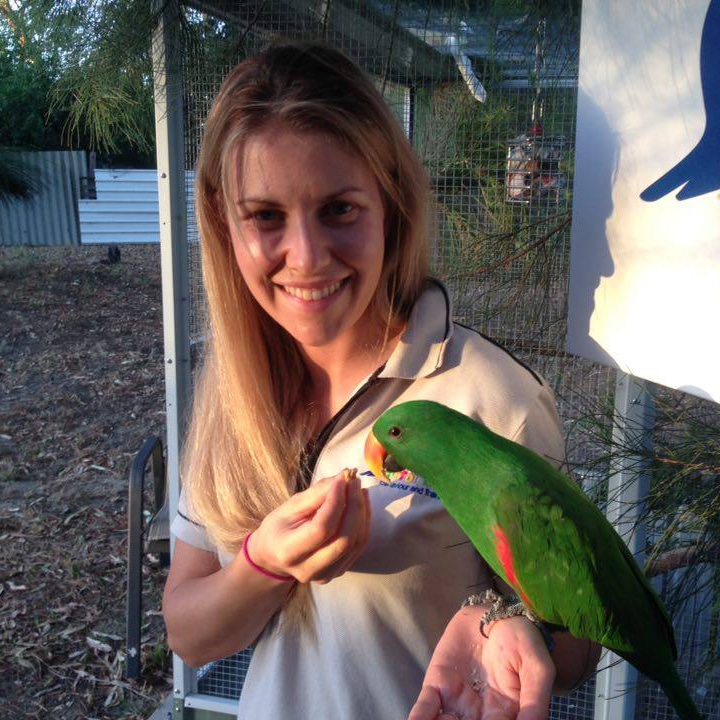
Stuck? Book a consultation with a Parrot Behaviour Consultant. You can contact Parrot Life® via [email protected] or via the website www.parrotlife.com.au
Article written by Rachel Riley of Parrot Life