
Take a Breath: Parrot Respiratory Health
Parrot breathing problems are often linked to everyday care factors such as diet, housing, air quality and stress, rather than being caused by germs alone. Because parrots have such sensitive respiratory systems, even small issues in their environment can have a big impact on their breathing and overall health.
The good news is that many respiratory problems are preventable. With simple, consistent husbandry changes at home, owners can greatly reduce risk and help their parrots breathe more comfortably and stay healthier long-term.
How Parrots Breathe
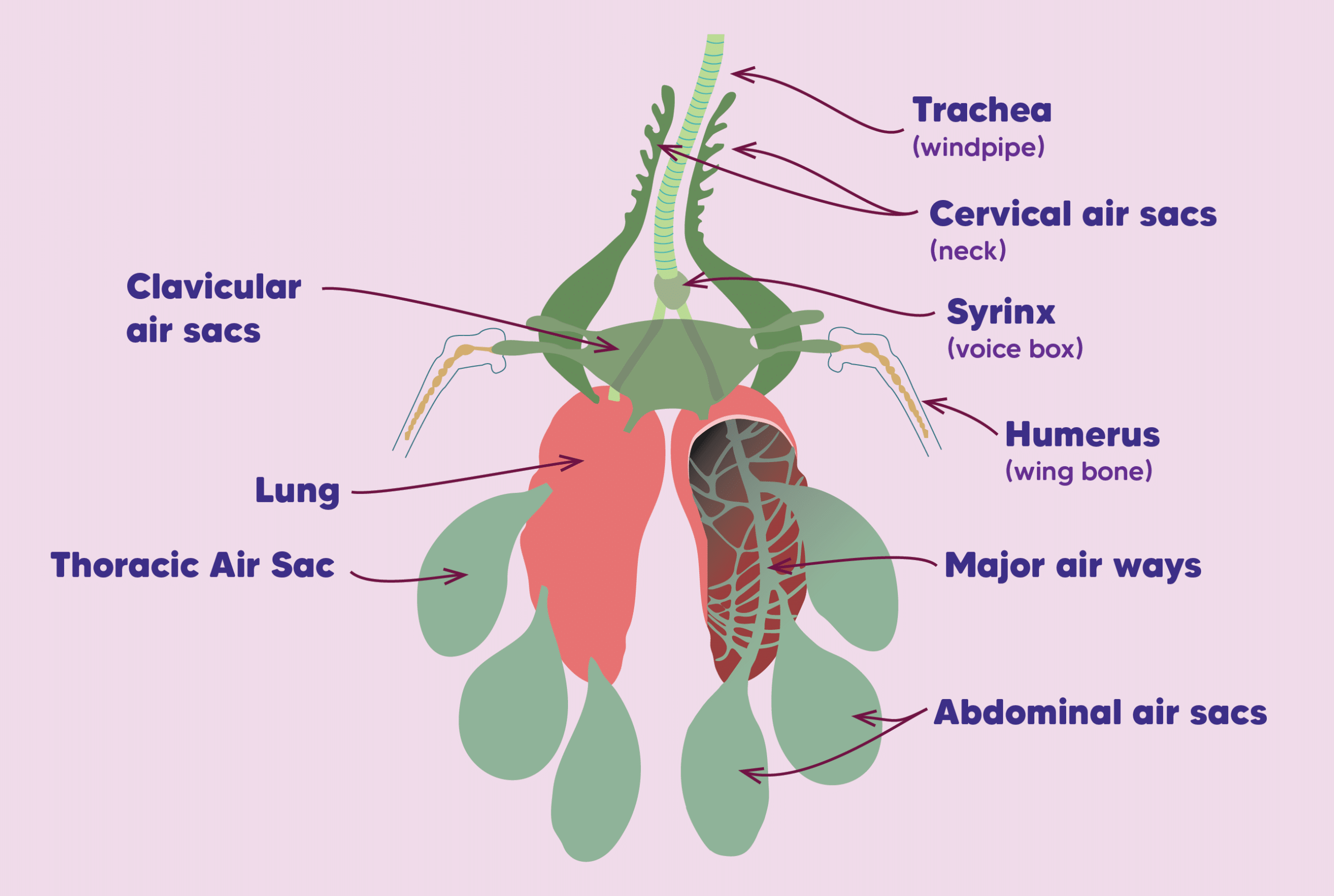
Parrots have firm lungs supported by a network of delicate air sacs that extend throughout the body, weaving between organs and even into some bones.
This highly efficient system allows them to use oxygen exceptionally well for flight, but it also means they are very sensitive to dust, fumes and poor air quality in the home.

The Importance of Diet and Bodyweight
Seed-only or poor-quality diets are a common cause of vitamin A deficiency in parrots. Vitamin A is essential for maintaining healthy tissues in the mouth, nostrils, eyes and airways. When levels are low, these tissues become damaged, leaving birds far more vulnerable to respiratory infections and blocked nasal passages.
Early warning signs often appear well before obvious breathing problems and may include crusty nostrils, dull or flaky skin, overgrown beaks or nails, and poor feather quality.
Simply correcting vitamin A alone, such as with a short course of supplements, is rarely enough. Most seed-based diets are deficient in a wide range of essential nutrients, so long-term respiratory and overall health relies on providing a balanced, complete diet rather than a single nutrient fix.
Obesity can also place significant strain on a parrot’s breathing. Excess fat within the body can compress the air sacs and heart, making it harder for birds to breathe comfortably. This is especially common in species such as Amazons, galahs, budgerigars, lories and eclectus parrots. Regular weighing, along with a controlled, balanced diet and appropriate daily exercise, plays a key role in supporting healthy respiration.
Exercise, Sunlight, and Climate
Parrots are built to fly, climb, and balance on moving branches; sitting still on rigid perches all day weakens muscles and makes breathing more laboured during any excitement or stress. Allow daily flight or active climbing time and provide natural, slightly flexible perches.
Regular safe time outdoors in natural daylight supports vitamin D production (important for bones and general health) and provides mental stimulation; many pet parrots get far less sun and variety than their wild counterparts.
Indoor conditions (heating, air‑conditioning, dry air) often do not match the natural needs of different species, especially rainforest birds like Amazons. Inappropriate temperature, low humidity, and stagnant, dusty air are major triggers for breathing problems.